


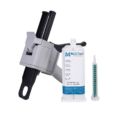
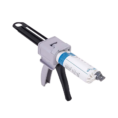




MDEP 3115#3517 Flexible epoxy potting compound
- Excellent adhesion and crack resistance
- It has a relatively high thermal conductivity
- Excellent electrical insulation and stability
- It can be used within the temperature range of -50℃ to 200℃
- It has a low water absorption rate and excellent water and moisture resistance
- It has excellent adhesion to metals (iron, aluminium and copper)
- 30-50 Shore D hardness
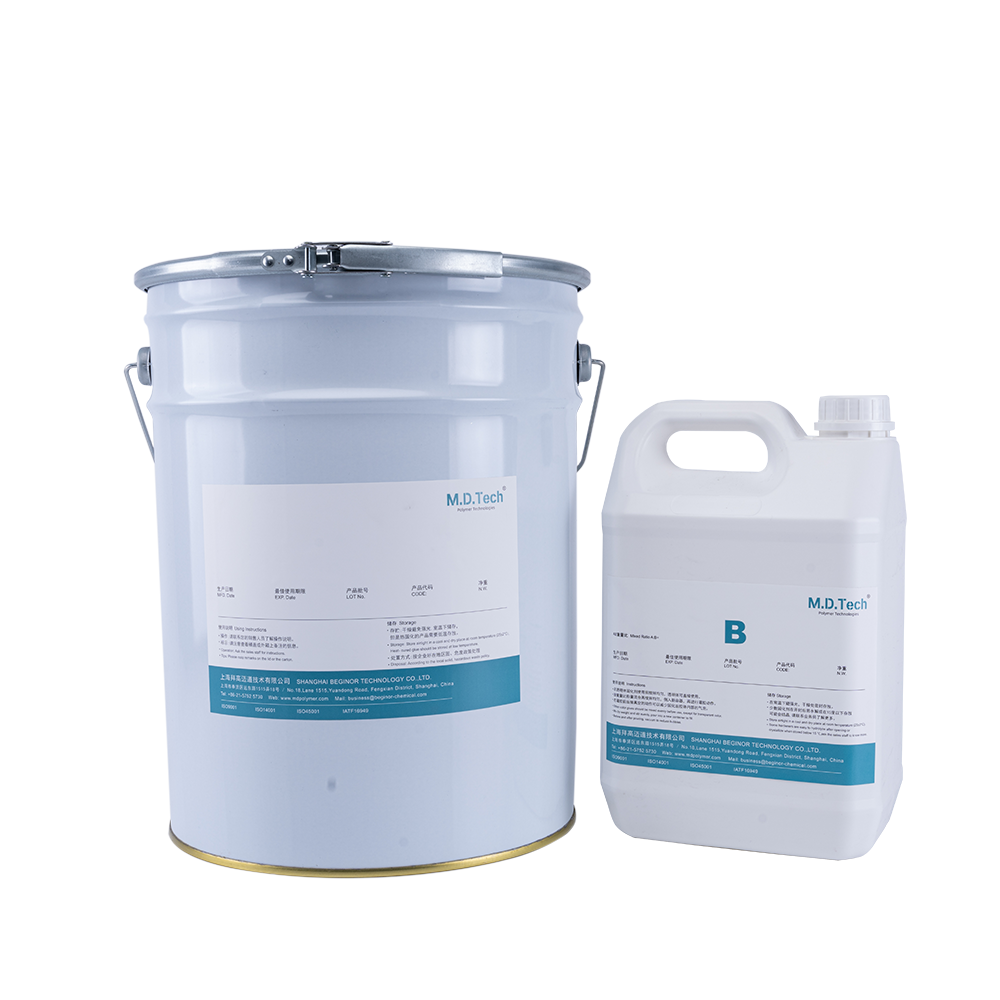
MDEP 3115 (3517) A/B is a two-component solvent-free Flexible epoxy potting compound that cures at room temperature. It is suitable for the encapsulation and protection of products with high thermal conductivity requirements in motors, automotive electronics, power tools, reactors, and instruments, and has good adhesion and insulation performance.
| Test items | Test standard | Unit | Part A | Part B | |
| Colour | Visual | — | Black plasma | Colorless or pale yellow transparent liquid | |
| Viscosity | GB/T 2794-2022 | 25℃,mPa·s | 25,000±5,000 | 50±20 | |
| Density | GB/T 13354-1992 | 25℃,g/cm3 | 1.65±0.05 | 1.0±0.05 | |
| Mixing ratio | Mass ratio | Ratio=A:B | 100:20 | ||
| Mixed viscosity | GB/T 2794-2022 | 150g,mPa·s | 25℃ | 2,000±500 | |
| Operation time | GB/T 2794-2022 | A+B=150g, min | 40-80 | ||
| Gel time | GB/T 2794-2022 | 25℃,hr | ≥5 | ||
| Hardness | GB/T 531-2008 | Shore D | 30-50 | ||
| Thermal conductivity coefficient | GB/T 10297-2015 | W/(m·K) | 0.7 | ||
| Shear strength | GB/T 7124-2008 | Mpa, Iron-Iron | ≥2.5 | ||
| Curing shrinkage rate | HG/T 2625-1994
|
% | ≤1.2 | ||
| Dielectric strength | GB/T 1693-2007 | kV/mm(25℃) | ≥14 | ||
| Loss factor | GB/T 1693-2007 | (1MHz)(25℃) | ≤0.005 | ||
| Dielectric constant | GB/T 1693-2007 | (1MHz)(25℃) | ≤2.8 | ||
| Volume resistance | GB/T 1692-2008 | DC500V,Ω· cm | ≥1.0E +11 | ||
It is suitable for the encapsulation and protection of products with high thermal conductivity requirements in motors, automotive electronics, power tools, reactors, and instruments, and has good adhesion and insulation performance.
Operation process
- Mixing: Due to sedimentation of fillers in Component A over time, stir Component A thoroughly in its original container before use. Weigh Components A and B in a 100:20 weight ratio, mix uniformly, and proceed with potting.
- Component B may crystallize or form lumps during storage (normal behavior). If crystallization occurs, melt it in an 80°C oven before use, then cool to room temperature. This does not affect its performance.
- Component B reacts with moisture in the air, producing a white powdery residue (hydrolysis byproduct). Avoid introducing this residue during weighing.
- Mixing may entrap air bubbles. Perform vacuum defoaming to enhance the electrical performance of the final product.
- If Component A is too viscous, preheat it at 40°C before mixing with Component B (100:20 ratio).
- Initial curing conditions: 25℃ for 24 hours or curing at 80℃ for 2 hours as designed after potting.
- Customers can adjust the curing temperature and time according to the actual size and dimensions of the potting object. The smaller the size, the shorter the curing time.
- For machine potting, consult our marketing department.
- Heat Components A and B separately in tanks to reduce viscosity, improving flow and penetration during potting.
- The amount of Component B in the curing agent—whether higher or lower than the normal ratio—will reduce the product’s hardness at elevated temperatures.
- The greater the difference in the addition amount of component B of the curing agent, the greater the hardness change of the colloid and the worse its temperature resistance.
Related products
MDEP 3115 flame retardant epoxy potting compound
Color: Black
MDEP 3102 general epoxy potting compound
Color: Black/White
MDEP 3108 transparent epoxy potting compound
Color: Transparent